
 Spotify
 YouTube
 Apple Podcasts
 iHeartRadio
 Amazon Music
 Castbox
 The Locals Who Keep Expats from Drowning (Literally) | ft. YucaFriends
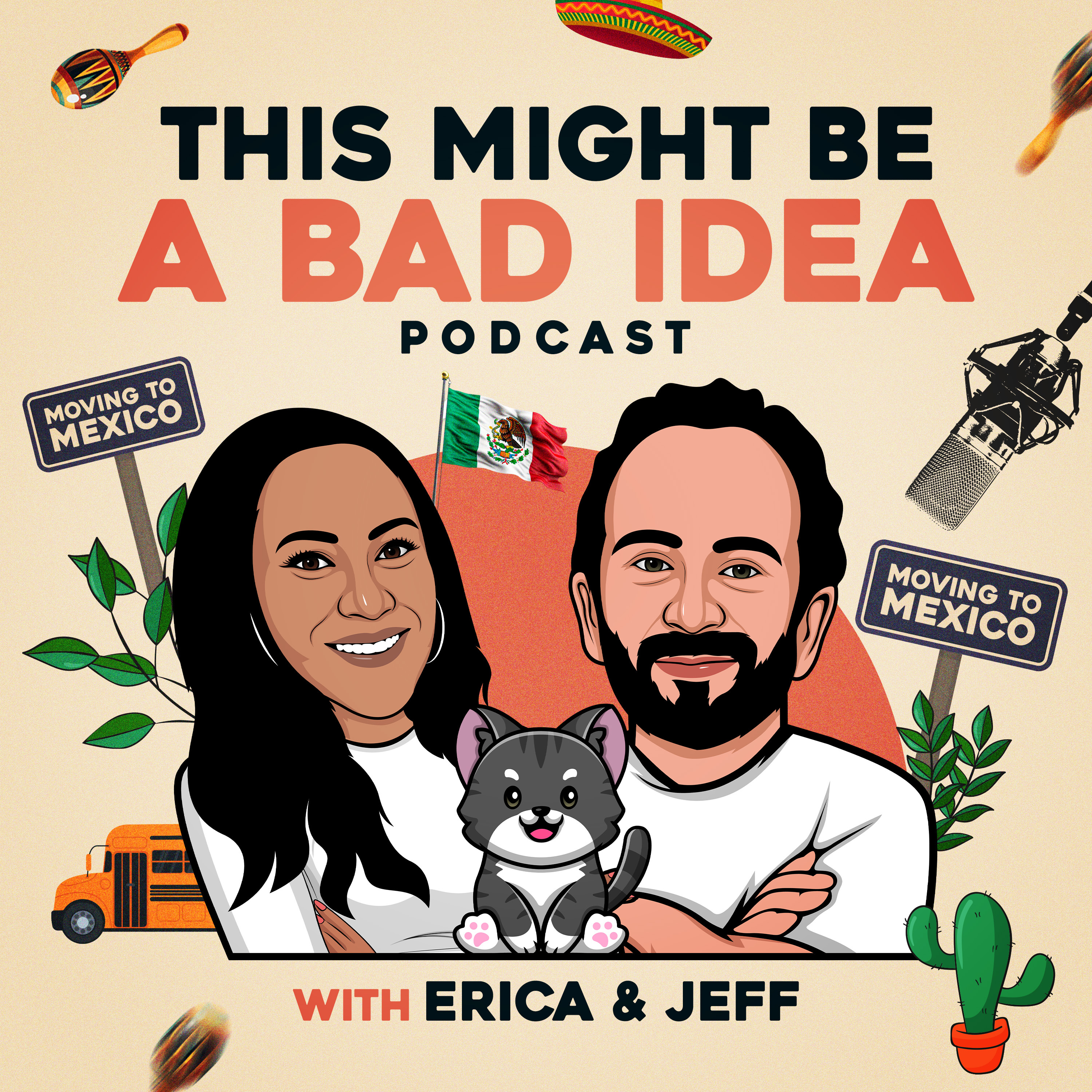
If you're thinking about moving to Merida, Mexico, there are a few things nobody warns you about until after you've signed a lease — like the water you can't drink straight from the tap, the AC unit that will betray you the moment you leave town, and the rooftop water tank that grows algae if you ignore it for a season. Carlos Bermejo and Juan Lara of YucaFriends have seen it all, and in this episode they walk Erica and Jeff through the real cost of Mérida expat life.
YucaFriends is a Mérida-based company built specifically for expats — connecting people with vetted real estate agents, trusted contractors, immigration referrals, and home management services for snowbirds and part-time residents. Carlos and Juan explain why water filtration in Mérida is non-negotiable (the city sits on a limestone shelf directly above a cenote network that was the ancient drainage system), and why skipping AC maintenance every four to six months can result in a 25,000-peso CFE electricity bill — a real story from a real client, with a realtor quietly pocketing payments in the background.
They also get honest about who actually thrives living in Mérida as an expat. Spoiler: Spanish fluency matters less than mindset. And if you're weighing downtown versus the suburbs, they have a clear-eyed take on expectations vs. reality.
In this episode:
Water quality in Mérida Mexico — why filtration is essential, not optional
AC and tinaco maintenance — the hidden costs that blindside part-time residents
Home management in Mérida for snowbirds and expats who travel
Cost of living reality check and common misconceptions about the city
Who thrives in Mérida vs. who struggles — and the two Spanish words that actually matter
Connect with YucaFriends: yucafriends.com | @YucaFriends on Facebook & Instagram
Subscribe to This Might Be a Bad Idea, an American expat Mexico podcast hosted by Erica & Jeff: thismightbeabadideapodcast.com
If you're thinking about moving to Merida, Mexico, you need to hear this. Erica & Jeff bring in Carlos Bermejo and Juan Lara — co-founders of YucaFriends — and the conversation covers everything expat orientation brochures leave out.
Why does water filtration matter so much? Mérida sits on a limestone shelf directly above an ancient cenote network — the same system the Maya used as a drainage and waste system for centuries. That water is still moving under the city. Filtration in Merida Mexico isn't optional, it's a baseline requirement for anyone living there full or part time.
What happens when you skip AC maintenance for a season? One client came back to a 25,000-peso CFE electricity bill — and discovered the realtor managing the property had been quietly pocketing the payments instead of covering maintenance. Carlos and Juan explain what proper AC service looks like (every 4–6 months), what to look for in a property manager, and how to protect yourself before you hand over the keys.
And if you think locking up your house for six months is fine, Juan has a tinaco story involving algae, a possible frog, and a very unpleasant homecoming that will change your mind. Rooftop water tank maintenance is one of the most overlooked parts of owning or renting property in Mérida.
Carlos and Juan also get honest about the real cost of living in Mérida, Mexico as an expat — who actually thrives versus who struggles, and why Spanish fluency matters far less than mindset and a willingness to meet the culture where it is. They cover common misconceptions about downtown versus the suburbs, what realistic real estate expectations look like, and how YucaFriends helps expats navigate vetted contractors, immigration referrals, and home management all in one place.
The episode closes with a rapid-fire True or False round and their best advice for anyone considering the move: don't try to change the people. Just learn two words — cerveza and vino.
In this episode:
-
Water quality in Merida Mexico — why filtration is non-negotiable
-
The 25,000-peso CFE bill story and what it means for snowbirds
-
Tinaco and AC maintenance — what part-time residents always miss
-
Who thrives vs. struggles in Mérida expat life
-
Real estate and cost of living reality checks
-
How YucaFriends supports expats from day one
Find YucaFriends at yucafriends.com | Facebook & Instagram: @YucaFriends | WhatsApp available via their website.
New episodes every week at thismightbeabadideapodcast.com
Thanks for listening to This Might Be a Bad Idea 🎙
Love, life & questionable decisions… from Mérida, Mexico. New episodes weekly.
🌎 Website: thismightbeabadideapodcast.com
💌 Share your “bad idea” story: hello@thismightbeabadideapodcast.com
YucaFriends (0:00): As your podcast name said, it probably is not the best idea. Pro I don't know if it's gonna work, but let's give it a shot.
This Might Be a Bad Idea (0:14): Alright. Welcome back to this might be a bad idea with love, life, and chaos collide. I'm your host, Erica Mascaro. And
This Might Be a Bad Idea (0:23): I'm Jeff, the other host, just here trying to stay out of trouble.
This Might Be a Bad Idea (0:27): And we have our guests today from Yucca Friends. So why don't you guys introduce yourself?
Carlos Del Mejo (0:32): We are top founders of Yucca Friends. I'm Carlos Del Mejo. I'm 29 years old. This is my partner, Juan Lara. Juan Lara, is there anything you'd like to say?
Juan Lara (0:40): Well, I'm something. I'm 37. Yes. We are the founders of Yucca Friends. Thank you very much for having us in your channel and your podcast.
YucaFriends (0:50): It seems really interesting. So thank you.
Speaker 1 (0:52): The big question is, so what gap in the market made you decide to create YUCA Friends and when did this come about?
YucaFriends (0:59): I have been friends with a couple of expats for almost twenty years. They have introduced me to some people during this time, and I have seen some issues that they had, like things that are irregular for Mexicans. Like, let's make an example probably about plumbers that never show up, or they show up and they do a really poor job, and then they make a problem bigger than it was. And I thought about it, like, for probably around five years that I should do this, I should do this, I should do this, until Carlos were about to finish university. And I said to him, you know, I have this idea.
YucaFriends (1:33): And as your podcast name said, it probably is not the best idea. Pro I don't know if it's gonna work, but let's give it a shot. So the the whole promise was to to make them feel made you make them feel more comfortable and provide reliable services and try to be create our career about what what we're doing and what we can do or not. So I think that was the the main thing. We or I saw a problem with the quality of the services and how the things were happening for the expats and how they were suffering because I feel like especially when they're as you guys are doing right now, when they're just moving, you don't know how it works how things work, and it's really different from The United States.
YucaFriends (2:13): Our main goal is to try to make the transition as smooth as possible with our services.
Unknown Speaker (2:18): So when people call you, what's the number one thing that they're usually stressed about?
YucaFriends (2:22): Probably water. I think water is one of the main issues, but I think it also depends on the stage of the moving or I mean, some people contact contacted us really early on the really early stages. Sometimes we just get connected with them, and they were asking us, I don't know, probably about the heat also, which today is gonna be the first day that we're gonna reach forty forty Celsius. So you're this is the real deal. So they start to ask us, how do we manage this?
YucaFriends (2:55): I have to be driving around, so I'm really suffering during the day. Even the car is not enough at 2PM with 43 degrees. So heat is one thing. Immigration, it's another thing that kinda worries them and finding a home. But I think water is one of the main things that we're all they are or you are always concerned.
YucaFriends (3:16): They are always concerned. The quality of the water and having to buy big bottles with garrafolas Some we those things. Also, the CFE bill, name change, and, of course, the the language barrier, it's more problematic.
Speaker 1 (3:33): So, like, right now, when the weather is hot, so how are you helping people with the heat? Are you helping them with AC systems? And then same thing with water. How are you helping them with the water situation?
YucaFriends (3:43): Well, the water, we provide filtration systems for the whole house and also, like, just for being able to drink from one faucet, but that will depend. There are people like, Medias growing so fast, so there are houses that are really outside the reach of JAPAI, which is the company that provides public water services for The States. So in that case, they are using well water. But there is something that is kinda sad and depends in which part of the city you are, the well water can be really dirty. So it is not even a good idea to have a shower for them using that water.
YucaFriends (4:19): So we install sometimes the whole system water, and we are really clear about it. That doesn't mean that you can drink that water straight from the faucet. We have to do more tests, and sometimes it's it's not even like that. And we have to add another reverse osmosis system that will go under the sink. And that's on the well water.
YucaFriends (4:38): We have to see case by case sometimes because, also, to be fair, there are some parts of the sea of the state that does have flowing water from the well, so there's no need to do some things, but we have to do analyze on the water. The natural filtration system, it's not enough. We don't have a drainage system, so yeah. But lucky us and the city reacted on a good way, so we're right now, by law, they are required to install a biodigester, So that helps a lot, that makes a lot of difference. And also, a lot of people who are moving to Medid are not used to having AC units.
YucaFriends (5:13): So they are not aware that you need to have maintenance every six months. Have units in the filters. And also for for me as Yucatecans, since we're worried about not paying 10,000 pesos for a CFE, like me and probably Carlos too, we try to use them just probably at night or or when the heat is really strong that you can take it, that's when we use it. But for people that are used to be in cold weathers, it's completely unbearable all day, so they are running continuously. That will create the need to do the maintenance instead of six months, every four months.
YucaFriends (5:51): So we need to, like, remind the remind them, like, oh, you you need to do your maintenance. Because it is not only that you're gonna see how the unit will be running faster and faster and faster, but you're gonna also be paying more CFE. It's working Right.
Unknown Speaker (6:08): What's the highest CFE bill that you've seen?
YucaFriends(6:11): 25,000 pesos.
Unknown Speaker (6:12): How much was it? 5,000 pesos. 25.
Unknown Speaker (6:15): 25. 25,000 pesos. Wow.
Unknown Speaker (6:18): That is big.
YucaFriends (6:19): That was not related to the AC. It was like a really sad story. We have these clients. They send us the bill. Yeah.
YucaFriends (6:27): And Carlos said like, they are saying that if you can go and check their electricity because there might be something wrong and blah blah blah. And then I was like, yes. But 25 is still too much. And then I said to Carlos, okay. Just go to the app and check what's going on.
YucaFriends (6:43): And then he noticed that nobody had been paying the bill for six months.
Unknown Speaker (6:48): Oh, that'll do it.
YucaFriends (6:50): We told them, wow, this is what's happening. And they were, like, really upset because the same company, the same realtor who sold their home to them, offered them the service of taking care of the house while they were away. Man, no. They were wiring the money every couple of months to pay the CFE, the water bills, and they were paying paying it. They weren't taking an attention to the house at all.
YucaFriends (7:16): It's a very sad story, but it happens, I'm sure. So
Speaker 1 (7:20): I mean, talking about that, you know, there's people who are snowbirds who leave and then come back during the summer season here. Is that something that you offer or are you just focused on helping people buy and sell homes? So tell us a little bit about that side of your business.
Carlos Del Mejo (7:34): We have clients that hire us for the administration of the home where they are going. What we do is basically offer the, like, a package depending on what they want, specifically, for example, if they want us to take care of the garden, we can do that. We can water the plants. We can check the pool, maybe do monthly cleaning if they require that. And of course, we will report on the situation of the house.
Speaker 0 (7:55): If you leave your home for three or four months, if you leave the AC totally off for those many months, you might have troubles when you come back because it needs to be running at least once a week or once every other week, just for ten minutes or twenty minutes, but it is important to turn it on. And also open the faucet so the water can be cleared out. Also, one thing that happens one time, a couple of clients left the house for three weeks, and when they came back, they were taking a shower, and the water was really smelling horrible. Linda, was it like
Unknown Speaker (8:28): a frog or a possum there? Oh, wow. No. There was nothing, but
Speaker 0 (8:31): it was, like, hello, or algae that since the water wasn't running and and it was no cover and the sun, you're creating, like, the perfect ecosystem for for aggies and mosquitoes. And so the the cover of the tinacos are really important. And I believe also that most of some of the Americans are not used to the tinacos.
Unknown Speaker (8:52): What things are different here in Yucatan that, you know, aren't usual for Americans as far as maintenance of the house?
Unknown Speaker (8:58): Oh my god. A lot of things. Carlos, we're talking about the the limescale. That's one thing. That's had everything to do with the filtration system that we talk, like a natural filtration systems.
Speaker 0 (9:10): Also add a little bit of of limescale or a
Unknown Speaker (9:14): lot of limescale. We have hard water here in Yucatan, so we will have a lot of what we call SARO, which is limescale. They will be accumulating to the entire plumbing system, so that's why water softening system could be important.
Speaker 0 (9:26): And not to scare you, and I don't have proven data, but at least people believe that it can create kidney stones.
Unknown Speaker (9:34): Yeah. That's what they say.
Unknown Speaker (9:34): Yeah. Basically, nobody drinks from the from the same food deposit because of that.
Speaker 0 (9:38): And also, I believe the Tinacos, but something that was really interesting that for us wasn't that important, at least in my home or for Yucatecans, the water pressure. It was really impressive for us how important for for Americans or Canadians or people from other parts of the country. The water pressure is I'm so you I wasn't used to shower with, you know, every whatever it was, it was I I was fine. Then I I cried, oh, I have to confess that I'm obsessed too with water pressure. But on the old days, I was like, okay.
Speaker 0 (10:08): Pretty much whatever. But, like, people get really stressed, I
Unknown Speaker (10:12): have no pressure in my house. You need to send someone.
Speaker 0 (10:15): It's really interesting that that that that also we have some friends that they believe that with their property taxes, the garbage services was included. And they were super convinced of that. And other friends, which is also gringo, and they live kinda near, was telling him, no. It is not included. You need to pay it.
Unknown Speaker (10:35): And no. They were so sure. And they asked me, like, You need to go and tell them that they need to pay the garbage in separate services. It is not the same. And they were like so impressed, Oh my God.
Unknown Speaker (10:48): And it is also interesting that they were feeling kinda ashamed about it. So but, yeah, it's sort of I think that's different too from the states. And, also, it bar it I I feel like it have variation from the state from from state to state in United States. Right? How they they work?
Speaker 1 (11:05): Different yeah. Yeah. Some is private. Some are with your township. So it's all set up different ways.
Unknown Speaker (11:10): Yeah.
Speaker 0 (11:10): One important thing that could be really problematic is the feeling of the prices in Mexico. Like, I feel when they arrive, they believe that this amount of money will buy them and every this and everything will be super cheap, and they're gonna be able to have, like, the most amazing life with $1,000 or, let's say, whatever amounts. But I feel like it there's an unrealistic expectation on how cheap life will be. We can notice when someone is just moving to the city and when they're here a little bit of time because they are really thinking the money can buy a lot more than it actually is. Some of our friends, and probably you have noticed that the prices, especially in the supermarket, are not really different from The United States when you do that.
Speaker 0 (12:00): You you're not gonna be marvelous rich here just to move.
Speaker 2 (12:03): But I mean, that that is interesting because, you know, when we were looking into moving here, that was something that we heard a lot. And I don't know if that was just people saying that to get clickbait on their YouTube channel or their website, but we did hear that a lot.
Carlos Del Mejo (12:18): It used to be like that. It used to be way cheaper, especially in the real estate area. You could buy pretty much a house for 1,000,000 pesos, 2,000,000 pesos, a big house, nice area of the city, not anymore. All that same house will probably cost you 5,000,000 pesos.
Speaker 1 (12:31): Right. It's not as cheap as it used to be. So when talking about misconceptions, is that the main misconception that people have when they move to the Yucatan? Or what other misconceptions do they have?
Speaker 0 (12:42): Buying a house in downtown will be the best decision ever and a lot of people regret. They don't understand that buying an old house will bring We've got many maintenance issues. And everything is and it's a diff and also noise. We have a situation, like, probably ten years ago when the when all of these expats wave started. And it was interesting because they bought houses in downtown, but they didn't do the research.
Speaker 0 (13:11): So after moving, they found out they were just beside a bar or a club. And a lot of the the expats started movement to stop the noise in downtown. So this kind
Carlos Del Mejo (13:24): of bad experience have kind of, like, slightly switched the perception of the people for the newcomers. But other than that, we have met, like, most we know most of the expats are not like that. So it's just a tiny French minority.
Unknown Speaker (13:35): Yeah. Yeah. It's good and bad everywhere. Right.
Unknown Speaker (13:38): I think what the one
Speaker 2 (13:39): thing we heard is if, you know, you don't wanna drive around, you want easy access to everything, move to the city. We're moving outside of the city, of course, you'd want a vehicle because it's a little harder to get to those type of stores. You know, any city, of course, is gonna come with a lot of noise and, you know, a lot of people out late at night, you know, having fun.
Speaker 1 (13:57): So talking about research and, you know, finding a good place, I mean, one of the things that you guys offer is real estate services. So how does your service differ from hiring just a regular real estate agent?
Speaker 0 (14:09): Oh, I think that the main difference is that we understand what you might need and what are your expectations and try to be realistic. We try to be really honest and tell you, like, okay. You can buy this place, but fixing it will be this amount of money. Or, like, this is cheaper, but it's really outside the city. You will need to buy a car because other than that, trying to use the public service will turn this into an nightmare.
Speaker 0 (14:34): We're not just trying to sell you anything. We're trying to put your best interest in first rather than we're just trying to sell you something that will give us more commission or or whatever. We're just trying to be like, this might not suitable for you if you have children or We try to analyze case by case, you know. Probably Europe, you don't know. And we strongly advise to do, as we said, the research to actually figure out if that area will work on the long term because, yeah, you might regret.
Unknown Speaker (15:03): I mean, it is a big decision, right? Yeah. Also, have like, a network.
Carlos Del Mejo (15:08): We work with lawyers. We we work with people that can help with it. For example, if you need comminzo, the immigration process, anything that's needed to to make the deal happen.
Unknown Speaker (15:17): So it's kind of a package deal then, like, if they need it, hey. You're moving here. We will offer you immigration. We'll help you find your house. We'll help you get your house started.
Speaker 1 (15:26): Is that what you kinda offer when you when people come?
Carlos Del Mejo (15:30): Like, an internal solution, basically, to get I think it's also important to point out that it is
Speaker 0 (15:36): not like Carlos and I are doing everything. We have professionals, people who are taking care of the different areas. So we have a lawyer for immigration matters. We have maintain for the maintenance. We have plumbers.
Speaker 0 (15:47): We have people who are specializing that. It is not like we are doing everything. Right? Because we won't have the time, and also we don't have all the knowledge for those things. So we have a team that is like, we are, like, seven people.
Speaker 1 (15:59): So what would you say makes it successful for someone to to live here and who struggles the most as well?
Speaker 0 (16:07): I think one of our gringo friends always said that you need to be aware that things are gonna be different. Mhmm. And try try not to label stuff as as better or worse, just different. And if you come with with your expectations that everything will be will be as it was at your hometown or your home city, you will be suffering a lot. So you need to understand that, especially here in Merida, things are slower.
Speaker 0 (16:37): Sometimes it looks like we don't care, but it's more like people it's like easy and nothing probably no one is gonna run and everything happens so slow. And sometimes it's important to remember why you moved here. If you want to have a relaxed type of life, and when you can take us you can take us we don't react to to moody people or it was like, okay. Just calm down. We're gonna fix it.
Speaker 0 (17:03): And that's the tricky part because we as the as as our business, we try to do that, but also working with other people sometimes makes us to be in a little bit of trouble because sometimes people is too relaxed. But I think the main advice would be to understand that this is a different culture and not to take things personally and try to relax. Like if you are coming here and pretending to change the people and to make the things happening as you are expecting all the time, you're gonna be suffering. We have saw that a lot, like and some people just decided, you know, this is not for me, and they move back. And that's that's okay.
Speaker 0 (17:40): Right? But, yeah, I think it's it's that just realizing we're in another culture.
Carlos Del Mejo (17:45): In our experience, many of the people that decide to go back to where where they came from, it's because they are they tend to isolate themselves. They just don't socialize. They don't get they don't meet new people. They feel alone. And then when people are starting to when the culture is different and they don't get what they want from the from the place they are moving in, they just go away.
Carlos Del Mejo (18:03): So we would recommend to to socialize, to get to know new people, learn the culture so you get to experience it, hear how to enjoy it.
Unknown Speaker (18:10): And also, I think learn a little bit of Spanish. Oh, I see.
Unknown Speaker (18:14): I see. Yeah.
Speaker 0 (18:14): You don't have to be perfect. Like in The States, sometimes we have seen videos like, you don't speak Spanish here because but here, we're just the other way around. And people is willing to help, and people is willing to try to understand what you need, even though you're not the perfect pronunciation or you're saying something that probably had no sense, but people will try to help. Speaking at at least a little bit of Spanish will will do and and we'll do a a big difference towards, like, beer, wine, cerveza, avinos. Important matters.
Speaker 0 (18:45): The important stuff.
Speaker 2 (18:48): Coming from The US, we've experienced here and everyone's open arms in helping us and answering, please trying to answer questions that we have.
Unknown Speaker (18:56): So So we're gonna do a quick rapid fire questions. True or false? Okay. Alright. Hiring a property manager is only for rich people who own multiple houses.
Unknown Speaker (19:05): False.
Unknown Speaker (19:05): And if I speak a little Spanish, I can handle immigration paperwork myself.
Unknown Speaker (19:10): That's a tricky one. If you if you have patience, you want a vacation and a lot of free time. True. Yeah. True.
Unknown Speaker (19:17): Mexico is Mexico. Merida can't be that different from other cities.
Unknown Speaker (19:21): True. Super true.
Unknown Speaker (19:22): Yeah. Oh, okay.
Unknown Speaker (19:23): My property is fine if
Unknown Speaker (19:25): I lock it up and leave it for six months.
Unknown Speaker (19:27): No. Appals.
Speaker 1 (19:29): So thanks for you guys for being on our show. Anything that you guys wanna tell people on how to reach you for future services?
Speaker 0 (19:36): Yes. You can find us on Facebook as Yucafriends, and we're also in yucafriends.com.
Unknown Speaker (19:42): You can send us an email.
Speaker 0 (19:43): You can contact us through Instagram, Facebook, WhatsApp. We have a TikTok that we don't use it too often. But, yeah, so you can find you can find us there, and thank you very much for the invitation and having us. Thank you so much for having us.
Unknown Speaker (19:54): Perfect. Thanks so much, Thank you.
Unknown Speaker (19:55): Bye bye.
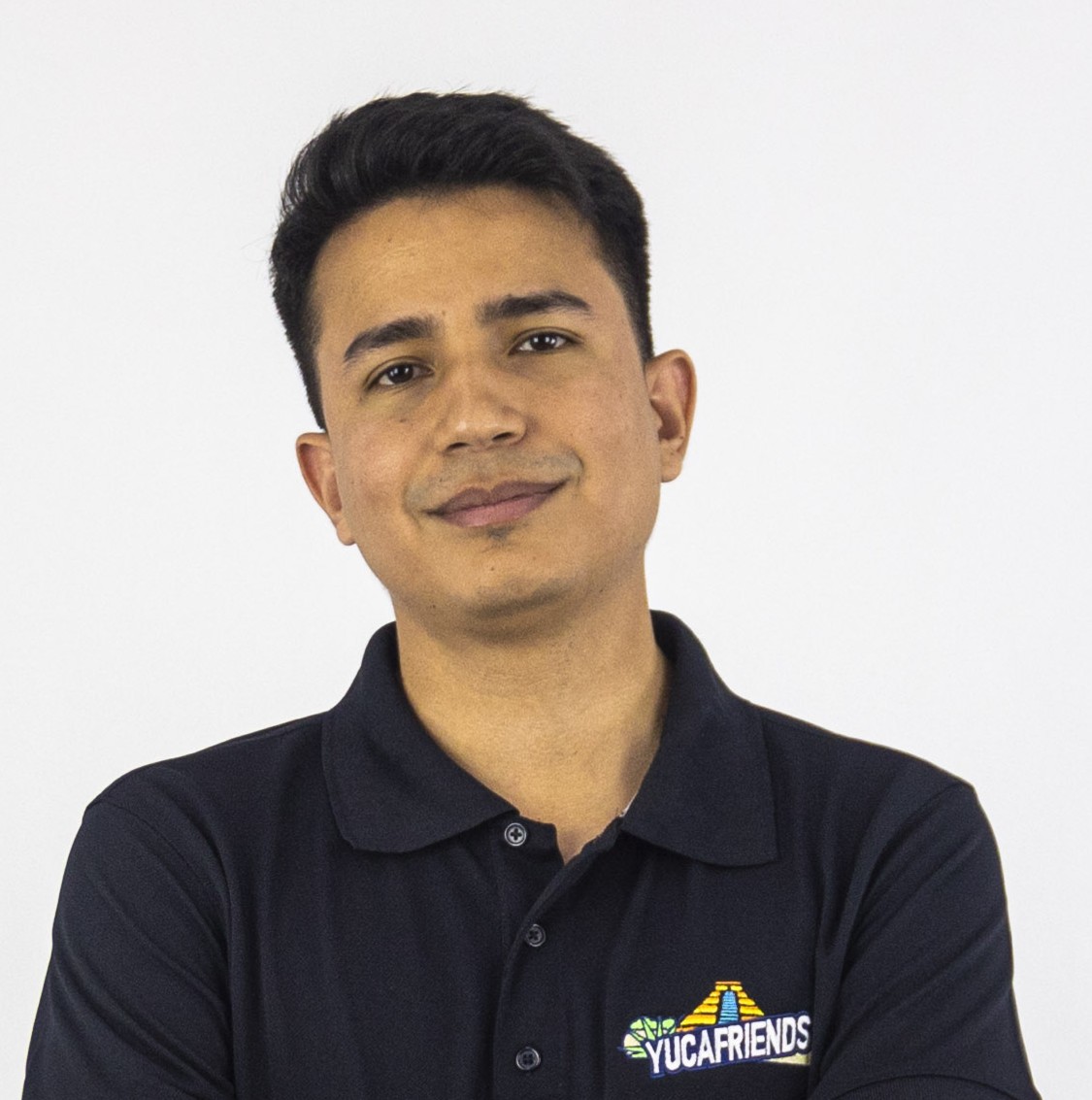
Born and raised in Mérida, Yucatán. I’m 29 and studied digital animation, with additional studies in biotechnology. I’m passionate about reading, writing, video games, electronic music, and discovering new bars. I’m also a proud dog owner of two. Since 2024, I’ve been the co-founder of YucaFriends, building services tailored for expats living in Yucatán.
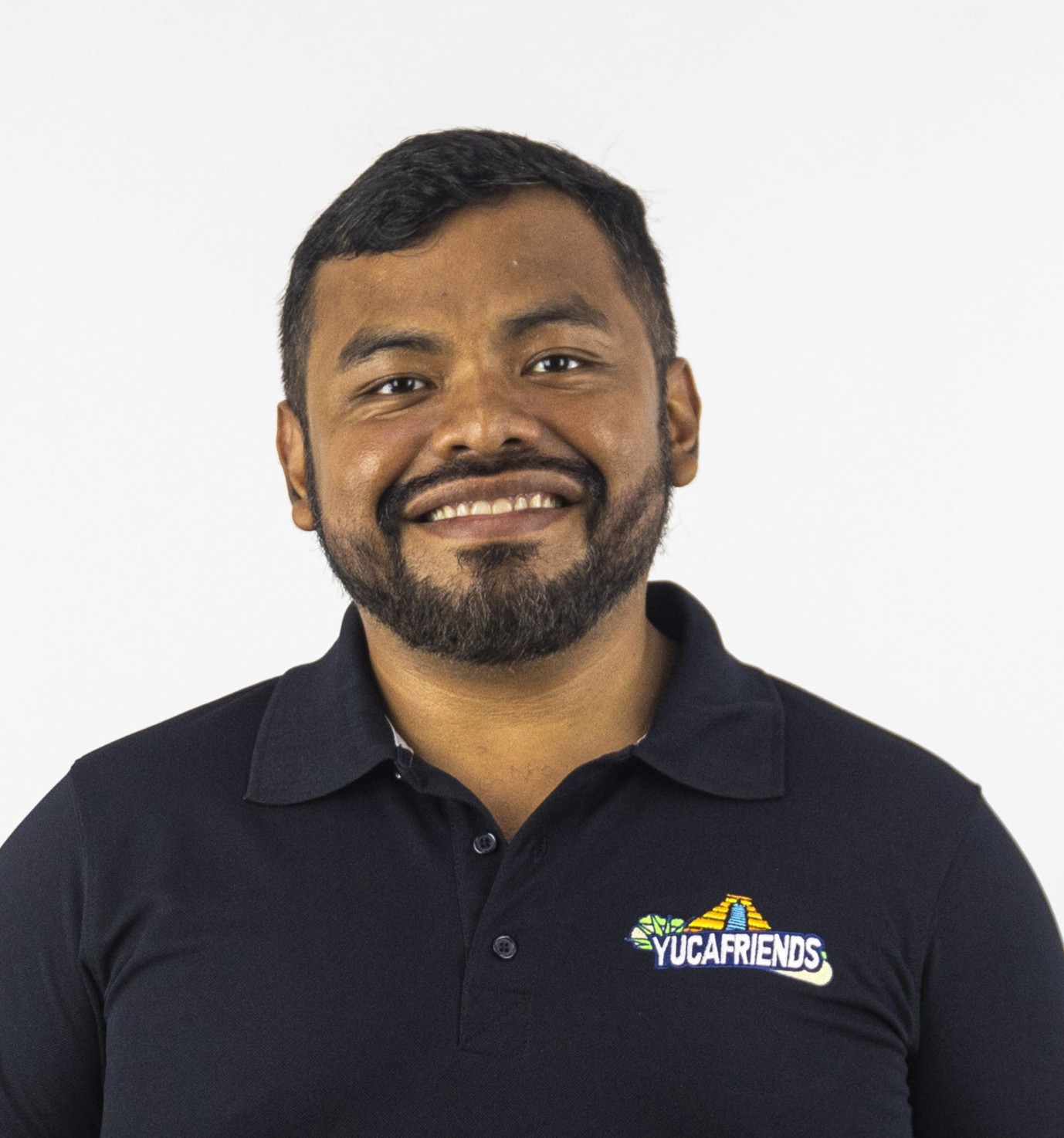
Born and raised in Mérida, Yucatán, I’m 37 years old and hold a degree in Marketing and Digital Business. I enjoy craft beer, electronic music, and building or fixing things in my free time. I’m a fan of The Lord of the Rings and have two dogs. I’m the co-founder of YucaFriends, where we focus on supporting expats living in Yucatán and helping them navigate everyday needs with ease.
