Spotify
 YouTube
 Apple Podcasts
 iHeartRadio
 Amazon Music
 Castbox
 4 Animals in Yucatán That Can Actually Hurt You (ft. Juan Pablo of e-control) — Ep. 6, Pt. 2

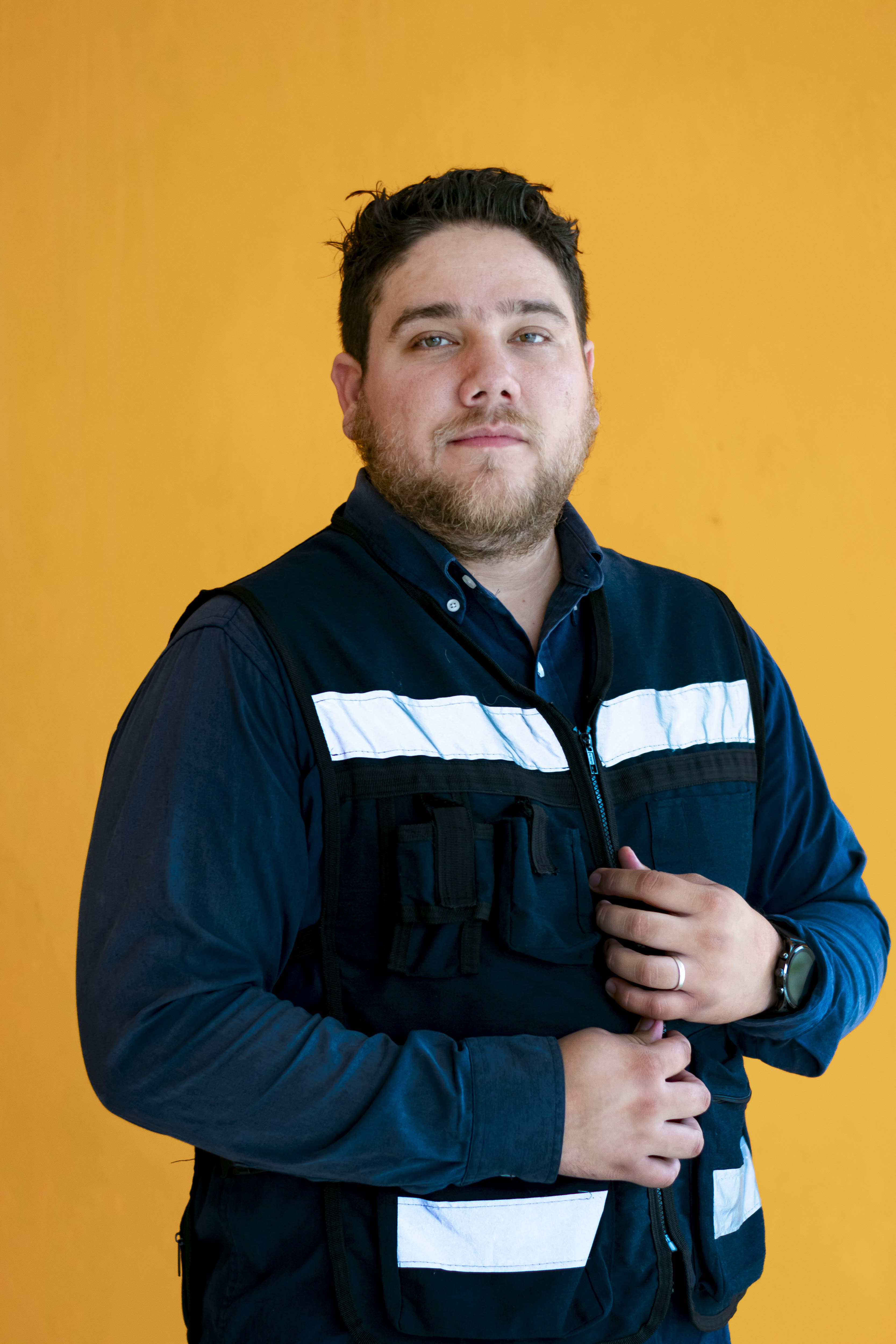
Juan Pablo from e-control pest control in Mérida, Mexico is back — and this time it gets serious. He walks us through the four animals in Yucatán that expats actually need to know about: scorpions (the small ones are worse — trust us), the Chagas kissing bug (a slow, silent parasite that attacks your heart over 20 years), dengue-carrying mosquitoes, and four venomous snakes. Erica's mom got dengue visiting Mérida. Jeff walked toward a yellow snake and lost the stare-down. Snake antidote can cost up to 35 vials — Jeff's reaction to the price is a full mood. We also bust the biggest pest control myths floating around the expat community in Mexico, and Pablo closes with his best story ever: five cats, one candy factory, zero rats. Pablo's final answer to "Is moving to Mexico a bad idea if you hate bugs?" — you'll want to hear it.
📲 Find Pablo: Instagram & Facebook @econtrolmid | WhatsApp available
Thanks for listening to This Might Be a Bad Idea 🎙
Love, life & questionable decisions… from Mérida, Mexico. New episodes weekly.
🌎 Website: thismightbeabadideapodcast.com
💌 Share your “bad idea” story: hello@thismightbeabadideapodcast.com
Speaker 0 (0:00): So if someone really, really hates bugs, like, can't stand them, doesn't wanna look at them, doesn't ever wanna see them, is moving to Mexico a bad idea?
Unknown Speaker (0:10): That might be a bad idea. That might be a good idea.
Speaker 2 (0:15): Yeah, yeah. If you have a zero tolerance level on pests, you should consider moving to Mexico and even more to Yucatan. If you you want wanna live here, you need to accept that you will coexist with them. Yes. Yeah.
Unknown Speaker (0:36): So, yeah, that may that might be a bad idea. Yeah. Perfect. I will say that there are four types of fauna that you don't want to deal with. Yeah.
Unknown Speaker (0:51): Scorpions. Mhmm. Mosquitoes. Daffodil. Snakes.
Speaker 2 (0:57): And there is this the chagas insect. So the the chagas bug, we call it here in Yucatan, we call it pig. The pig could be carrier of the trypanosoma. Trypanosoma is a type of parasite that it's under under fecal material. Oh, wow.
Unknown Speaker (1:17): Okay. So in the moment when they sting, they drop at the same time.
Unknown Speaker (1:21): Mhmm.
Speaker 2 (1:21): And when we scratch, you put that parasite. Yes. That's right. You spread it. Yeah.
Speaker 2 (1:28): And that's the moment when the intoxication arrives. It's more like a silent killer because you started having a couple symptoms maybe in a couple weeks, but you don't you don't the the the symptoms are like a like an allergic reaction. You know, the crying eyes, maybe a snows, is even sneezy, and that's all. And then this Trepanosoma starts to allow in your heart, and and it can make a very bad infection. So yeah, it kills you like in twenty years when it's already too late.
Speaker 2 (2:02): Yeah. So the dengue mosquito. The dengue mosquito, not all the mosquitoes have dengue. Just a little percent have dengue. And yeah, you need to be careful, and the best way to be careful is with your mosquito screens.
Speaker 2 (2:17): All your house in all the houses in Yucatan needs to have mosquito screen. For for us, that's that's a thing that is necessary. Also as keeping your your kitchen clean, and you're washing your dishes, you need to have your mosquito screens. There are people that like to ventilate the house. You can do it at the midday.
Speaker 2 (2:38): You can ventilate if you like to to ventilate your house. But in the morning or in the afternoon, you need to put your mosquito screens if you're gonna leave your windows open because dengue is something real. Right. Yeah. I have heard we've yeah.
Speaker 2 (2:52): Heard of My mother has. My mother was here for a visit last year and in November, and a mosquito with dengue bite her, and she had dengue one month. Yes. That's terrible. So dengue dengue is very real, and sometimes people underestimate.
Unknown Speaker (3:11): Mhmm.
Speaker 2 (3:11): But yeah, dengue, so in COVID, the saliva was the main vector, but here the vector is the mosquito. So when you are dining with rats in a restaurant, in an open restaurant, there are mosquitoes biting. Yeah. And goes with one leg, then they go to another leg, and they they go to another leg, and that's how the thing it gets. So it's similar with the pig.
Speaker 2 (3:36): All the pigs can carry Trypanosoma chagas, but not all the pigs have chagas. So maybe you will see that pig, but that doesn't mean that that pig has chagas. So yeah, we need to relax a little bit, you know. A lot of business a lot of pest control business scary the people. I don't like that.
Unknown Speaker (3:57): You know? I don't like to scary people that You just like to scare the bugs.
Unknown Speaker (4:02): Yeah. I
Speaker 2 (4:05): don't I don't like to to scare you because that's one of the most cheapest tools
Unknown Speaker (4:09): Right.
Speaker 2 (4:09): That the pest control business have, and I don't like them. I like to I more I rather more education. So I like to that's why I like to give you the the the best ideas of of what these insects can do. So mosquito and beak are two of the four that I could say. Scorpions
Unknown Speaker (4:27): Yeah.
Speaker 2 (4:27): Are the third one. We only have three, four species in Yucatan. None of them are lethal. Maybe if the the the things that they hurt Yeah. You know?
Speaker 2 (4:38): Yeah. You want to give an idea also to people that is hearing us. You you want to have an idea. I mean, imagine that you grab a needle and with with strength you do like this. Yeah.
Unknown Speaker (4:48): That's that's an example of how it hurts. Okay. You grab a needle and you do with with your strength. Okay. And that's that's pretty much.
Unknown Speaker (4:56): So
Speaker 2 (4:56): it hurts a little bit later, but that's almost. There's nothing maybe you could have a couple of allergic reactions, maybe you can have a little bit of your sneezing, a little bit of pressure in your ears, maybe you can have a little bit of blurry eyes, maybe your tongue gets a little bit inflamed, but that's almost everything in a couple hours it's gonna be out. Okay. Also it's good to watch yourself, so how's the rule? If they are forbidding you if the poison it's for I mean if their reaction it's not being able to you to do something that's the moment when you need to go to the hospital.
Unknown Speaker (5:39): If you can see, if you can hear, if you are shaking, if you are if you if the food doesn't have a Taste. A taste, that's the moment when you need to go to the hospital. And they are going to give you a serum or something like that, and you're gonna be fine.
Speaker 3 (5:53): No. Know. Thing that we talked about that I thought was so interesting is that the smaller scorpions hurt way more than the big was. And I thought that was interesting because you look at this the big scorpions, you think, oh, wow. That thing must hurt.
Unknown Speaker (6:06): Then Yeah.
Unknown Speaker (6:06): You're thinking the small ones are so adorable, but they're gonna hurt way more than the big ones.
Unknown Speaker (6:10): That is because the the poison is more concentrated. Okay. They have in a very strong concentration. Because
Unknown Speaker (6:16): they're smaller.
Speaker 2 (6:17): That's right. That's right. They are new ones or they they are creating this poison. So they have it on a very concentrated doses.
Unknown Speaker (6:26): So pet the bigger scorpions, don't pet the smaller scorpions. That's right. And Any of them. Yeah. No.
Unknown Speaker (6:34): They are doing They like
Speaker 2 (6:36): they are very nocturne animals. So they like to move in the night. It's very very uncommon that you see a scorpion in the day. Yeah, it's more or very very early in the morning or very very in the night. Okay.
Speaker 2 (6:51): Yeah and that's the third one and the fourth are the snakes. Yeah so we only have four that it could be dangerous, the rattlesnake, The we we have here the Nawyaka. Also, the I think the Nawyaka is called yellow yellow snake. I don't I don't know. Maybe.
Unknown Speaker (7:12): I don't remember. Because it's yellow? Yes. Okay. We also have the Wolpoche, and and we also have the coral snake.
Unknown Speaker (7:19): You're very related with the coral snake.
Unknown Speaker (7:21): Okay.
Unknown Speaker (7:22): Coral snake is very common here. Yeah. Okay? So, yeah, actually, in Concal, it's an area that yeah. Yeah.
Speaker 2 (7:27): There are a couple ones that you can see in a year. So the fourth of them are dangerous. It's very important that if you see a snake in your garden, you don't lose the eye on them. You need to call the the firemen, and and they will try to do their best to get rid of that. The firemen, they are not we we always see the firemen just as firemen, but they are also civil protection.
Speaker 2 (7:51): Okay. So, yeah, they get rid of of of of bees nests, of wasps nests, and also snakes. They have the tools doing it. I need to tell you that I need to you want me to like two years ago we we took a course of how to man manipulate the snakes and how to relocate them. But you know everything was good.
Unknown Speaker (8:13): I was doing it good with this how do you say this constrictor snakes? Yeah. That eat mice. Okay. These rat snakes.
Speaker 2 (8:24): Yeah. These that eat mice, eat rats, maybe eat a lot of insects. You know, harmless snakes.
Unknown Speaker (8:29): Yeah. Yeah.
Speaker 2 (8:31): Everything goes good until you have a rattlesnake in front
Unknown Speaker (8:33): of Yeah.
Unknown Speaker (8:34): You know, sometimes the snakes know that they have the poison to to kill you. Yeah. So they they kinda
Unknown Speaker (8:41): They're more aggressive.
Unknown Speaker (8:42): They are more aggressive. So, yeah, you're doing good your work. And in the moment when you have a rattlesnake in front of you, you say, this is not for me. Yeah. I will leave Belle the fireman do this.
Speaker 2 (8:52): Yeah. So, yeah, we stopped doing the the the snake thing a lot of years ago because of that. So, yeah, you need to be careful about these these four insect four sorry. These four type of snakes. One is three are three three of them are vipers, and one of them are culebras.
Speaker 2 (9:10): That means a snake, a regular snake. What what happens if they go to they they know how to climb very well, a eu reptan. So what happens if they go to your neighbors? The best way to to to do it is just calling them, knocking the door, and tell them that you had a snake on on their garden so they can be aware of that.
Unknown Speaker (9:30): You know, to say, oh, I threw a snake over your
Unknown Speaker (9:32): what a good joke.
Speaker 2 (9:34): It's important to tell them because sometimes the kids are playing in the garden, and it can be it could be a mess. And and the snakes likes to go into the pool system. Oh, yeah. Yes. Sometimes you are giving maintenance to your pool and you open the lid and there's the snake and and Yeah.
Unknown Speaker (9:50): So it's better to tell the neighbor, hey. I have a we have a a rattlesnake in your house in in my house. I have a coral snake in my house, and it go to yours. It could. Sometimes when you share trees
Unknown Speaker (10:01): Right.
Speaker 2 (10:01): They go over there. So, yeah, it's better to tell them what could happen if one snake bites bites me. It would be interesting. We have I'm gonna talk about antidotes a little bit if you if I have we have time. So we have green that the green antidote that it's the green code that is called vipramine, vipramine, and that is for vipers.
Speaker 2 (10:24): Mhmm. For emotoxins. So we have also the white the the yellow coat that is for the coral, that is called coralmin coralmin, and it's for coral snake. And we have also the gray one that is for recluse spider, La Vanya reclusa, the violinist spider. That's that's we we have that.
Speaker 2 (10:49): I don't wanna scare you. You only you only gonna see them in very very strange places. They love abandoned places. They love places where you storage wood Okay. Or carpent trees.
Speaker 2 (11:03): And you and you and you leave it like that with humidity, those are the places when you have a recluse spider. That is more like cytotoxin, and that is more like a necro necrotic type of poison. Yeah. That it starts to to rot in the tissues. So, yeah, that's that's dangerous.
Unknown Speaker (11:22): You
Unknown Speaker (11:22): know? Yeah.
Speaker 2 (11:23): So this one, people think that, oh, rattlesnake bite me. Yeah. I need to wipe need to buy one of those vipermint vials. And but it's not just one. Sometimes you need you can need 20 of them.
Speaker 2 (11:39): It depends how the poison is involving to your body. Yeah. And it's very expensive. One of those is like 4,000 pesos. So yeah.
Speaker 2 (11:48): And and and the coral the coral mean, it's like 5,000 pesos also, and you could need you could need 25, 30. The recluse spider, there was this case that this guy needed 35, 40 vials, and that is 17,000 pesos.
Unknown Speaker (12:08): My gosh.
Unknown Speaker (12:09): And Come on. Just to survive? Just to live? Just to my god.
Unknown Speaker (12:15): Just to live, and you know what? And if you leave, you're gonna be broke.
Unknown Speaker (12:18): Oh my god.
Unknown Speaker (12:19): So these cut the snakes.
Speaker 3 (12:21): Well, I did the other day. I was walking. I saw a yellow snake. Okay. He looked harmless.
Speaker 3 (12:26): I walked over to him. He kinda stood there, didn't move. And then eventually, I backed over, but I backed away, but he was a yellow snake. Yeah. I saw a yellow snake.
Speaker 2 (12:34): You need to you need to just leave it there.
Unknown Speaker (12:37): He likes he likes all the the pests.
Unknown Speaker (12:39): How long did it go up?
Unknown Speaker (12:41): Film it. Just be careful. I mean, just be careful. If you wanna do it, do it. Just be careful.
Speaker 2 (12:47): Just keep your distance, you know, because they are very fast.
Unknown Speaker (12:49): I'll just need, like, 10 or 15 vials. That'll be good. How
Unknown Speaker (12:52): old are You know and you know, you never know the strength of a snake until you have it on your hand. Yeah. Or you have it with your with your with your materials that we used for grabbing snakes.
Unknown Speaker (13:02): Or something like that.
Unknown Speaker (13:03): No. No. No. The the these metal things.
Unknown Speaker (13:05): Oh, the metal. Yeah. They they grab the
Speaker 2 (13:07): That's right. When when you grab it and you see how strained they are, that's like that's like when you see, wow, these snakes are.
Unknown Speaker (13:13): Yeah. He's strong.
Unknown Speaker (13:14): Yeah. So we're gonna do a quick rapid fire. Okay. Okay. Sounds great.
Unknown Speaker (13:18): Sounds great.
Speaker 0 (13:19): Alright. True or false. Okay? Okay. Okay.
Speaker 0 (13:23): If I fumigate once, I'll never see bugs again.
Unknown Speaker (13:26): No. That's totally false. Yeah. Yeah. Yeah.
Speaker 2 (13:27): If you you the fumigation, as I told, it's you need to see us as a gardening as a gardener, as a as a pool guy, as a as a cleaning staff in your house, it's in pest control services is also a service of maintenance. Maintenance.
Unknown Speaker (13:47): If my house is new construction, I won't have any bug problems.
Speaker 2 (13:51): It's false also. I mean, that those have the new houses have the advantage that they are new, so they they could not have insects.
Speaker 0 (14:03): And then the last one, seeing bugs in your house means your house is dirty.
Speaker 2 (14:08): That could be true. That could be true because, yes, the the the the the insects and the the bugs like like the the places that are not clean, not order. They yeah. It's it's it's part of the nature. You know?
Unknown Speaker (14:26): The jungle is like that.
Unknown Speaker (14:28): Yeah. It's
Speaker 2 (14:28): a a mess. So you go to if you go to a house that is a mess, maybe you can have. And, yeah, yeah, I I don't like to say it like that because because as I told you, it's not my my my word to judge, but but it's true.
Speaker 3 (14:43): What about I just moved to the Yucatan, and I looked out the window and saw a bug as big as a human head? Not sure. But for
Speaker 2 (14:52): Maybe you can find a tarantula as that size.
Unknown Speaker (14:55): A big really a tarantula?
Unknown Speaker (14:57): That big? I mean, mean, not as a head, but you can find a tarantula as my head. As a beager. Yeah. Yeah.
Unknown Speaker (15:04): I have I have stories. God.
Unknown Speaker (15:06): I have Not seen not human heads. Not something. There's no insects that are massive. No. No.
Unknown Speaker (15:11): They're gonna attack you now.
Speaker 2 (15:13): No. We don't have that. Actually, the only thing that could be aggressive, as I told you, maybe a a rattlesnake Yeah. And maybe the scorpios. That's the mostly
Speaker 3 (15:24): Normally, you hear the rattlesnake. I know I've came across them in Arizona. Yes. And you would hear them because as you get closer, that's the one thing that they do, you know, hopefully to say, look. Stay away.
Speaker 3 (15:37): That's right. That's very much. And I know I did hear it, that's exactly what I did. I just kinda backed away, didn't get a good look at it because it was just in the weeds, but I imagine that's what we'll hear, of course, if we're
Speaker 2 (15:48): It's the same it's the same thing. You can hear them on a distance, and and it's a and, yeah, you can as you said, it's a warning. It's like, hey, I'm here. This is my area. Just don't walk here.
Speaker 2 (16:00): Yeah. And there is also one that I liked a lot that it's about the pets on that pets help to to have a have a better pest control in your house. Really? Yes. And and the pets work a lot.
Speaker 2 (16:16): Yeah. Well, know, sometimes we have these poodles that we have in our house that we spoil too much, or we have these cats that spoil too much in our house, and that those already lose the that those abilities to to to control the insects in house. But
Unknown Speaker (16:34): Leo's not chasing after it.
Unknown Speaker (16:35): But the animal but in general Milo will kill somebody.
Unknown Speaker (16:39): Yeah. Yeah. So they are a couple and then can do it.
Unknown Speaker (16:42): So in general, it's good to have cats and dogs because they will somewhat get rid of some
Speaker 2 (16:47): Somewhat yeah. Maybe if you have two dogs, maybe one of them can can get rid of the of that troubled mice that enter into your house. Maybe the cats, They love to eat to hunt roaches. They love to hunt different type of insects in the house. So they they are actually, I have a I have a very funny story.
Speaker 2 (17:06): I won't say the name again, but I have this candy shop, candy factory in in in in downtown in Centro. A lot of years ago, I I started working with them. And, you know, there was a couple rats that enter into the into the warehouse, and it was a big warehouse full of candy bags. Wow. A candy bag.
Speaker 2 (17:27): And yeah. And so one day I had a report, Pablo, another bag. And you know what? This is a bag that has 100 little bags.
Unknown Speaker (17:36): Yeah.
Speaker 2 (17:36): So if they rove the bag, you can't sell that bag anymore. So it was just not a problem of of of the of the pest controller. It was also a problem of inventory because we were losing because of that five rats that enter into the into the warehouse. And it was a problem because daily was the same thing. So we were losing tons and tons of products that
Unknown Speaker (18:00): Great products too. Candy. Yay. You slammed it in
Unknown Speaker (18:03): the morgue. Not just candy, you know, also snacks like Cheetos and and all these things that that that we sell in Mexico, chicharrones.
Unknown Speaker (18:12): Yeah.
Speaker 2 (18:12): Yeah. So I said one day, I was I need a meeting with the with with the CEO, with the director. And he was like, okay. I will get it to you. And then here's here he calls.
Unknown Speaker (18:22): Say, Pablo, go to the office. How are you? It's good to see you. Well, what are the plans, man? What are gonna do?
Speaker 2 (18:29): Because I'm losing money. What are gonna do? We are we are paying you, so what's the problem? I said, you are gonna kill me, but we need to do something crazy. And he was like, what do you wanna do?
Speaker 2 (18:41): You're gonna kill me, but I need to tell it to you. We need to put cats. And he was like, Pablo, we are a professional on pest control services, and you're telling me that we need to put cats on the warehouse. And I was like, it's the only choice we have left. Wow.
Speaker 2 (18:59): We already did trapping them. We already put the bait. We already put different types of baits. We already were hunting them. So I was like, the cats are our only choice.
Speaker 2 (19:10): Yeah. I managed with a with a with an association. We have five cats, and the company adopted them. Okay. So we they give them food, shelter, very nice.
Speaker 2 (19:22): They were very nice with the kitties. And and we put the cats in. Day later
Unknown Speaker (19:27): Wow.
Speaker 2 (19:28): No mice. Wow. No rats. Not anything. And that is because it's a natural Yeah.
Unknown Speaker (19:37): Yeah. What nature does. Yeah. So in the evolution
Unknown Speaker (19:41): Yeah.
Speaker 2 (19:42): The the predators produce a type of enzyme that they transpire, and the preys have learned how to smell it. Ah. So in so if they if they smell these types of different molecules that the predators produce, they go away. Yeah. Because they they I'm not gonna I gotta I'm not gonna die for you.
Unknown Speaker (20:07): I'm not crazy, though. Like, Emmy. Surviving doesn't sound as good.
Unknown Speaker (20:11): So yeah. Yeah. Yeah. If so if people ask, is it good to have cats to to beg insects?
Unknown Speaker (20:16): This is the people who don't like cats. True. Hey.
Unknown Speaker (20:19): What a great what a great way to get
Speaker 2 (20:20): rid Yeah. Of It's a it's a funny story. I have a I have a couple of those. Great story.
Unknown Speaker (20:25): Great story.
Speaker 0 (20:26): Yes. So in fashion of this might be a bad idea, we always ask our our hosts or our guests. So if someone really, really hates bugs, like can't stand them, doesn't wanna look at them, doesn't ever wanna see them, is moving to Mexico a bad idea?
Speaker 1 (20:44): That might be a bad idea. Might
Speaker 2 (20:48): be Yeah, it's a if you have a zero tolerance level on pests, you should consider moving to Mexico and even more to Yucatan. Yeah, if you wanna live here, you need to accept that you will coexist with them. Yes. Yeah, so yeah, that might be a bad idea, yeah.
Speaker 0 (21:13): Perfect. Well, thank you so much for being our guest. Thank We really enjoyed our time. And how can people reach out to you?
Speaker 2 (21:19): Our name of the business is eControl. You can see all our work in our social media. We are on Instagram as eControl. Meet. Also on Facebook seecontrolmed.
Speaker 2 (21:30): Yeah, so you but you can find us everywhere and if you have a question you can send us a WhatsApp and we will be it will be a pleasure to serve you on any doubts you can have. Perfect. We have a we not also do fumigation, we also do refrigeration. So we also do installing, we do repair. We also do upholstery cleaning for couches, carpets, beds, everything mattresses, everything dining chairs, everything you can have in your home.
Speaker 2 (21:59): And we also do the waterproofing service of painting in the in the roof. Okay. Yeah. Those are our are our our five services that we have. And and
Unknown Speaker (22:09): Well, thank you so much again.
Unknown Speaker (22:11): It was a pleasure. Thanks for having me. And we learned it was great.
Unknown Speaker (22:14): Thank you.